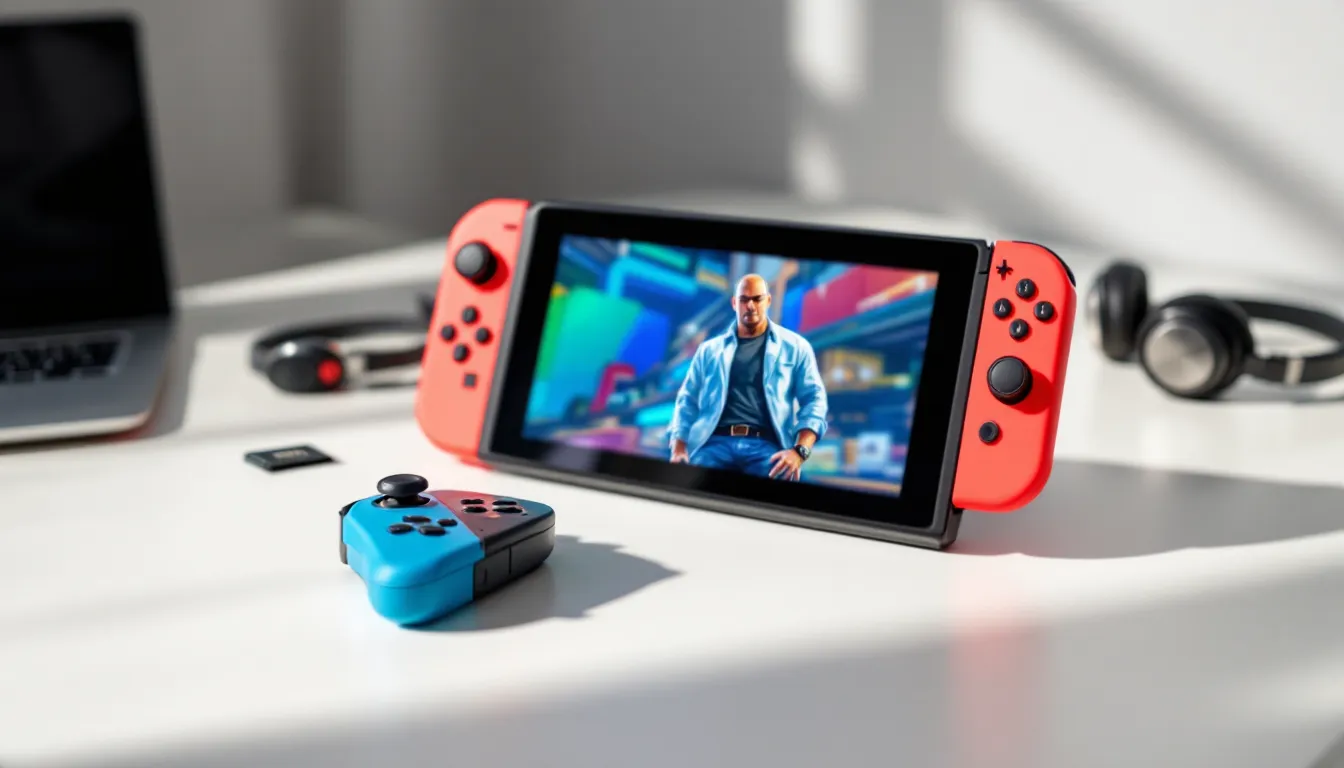

The Nintendo Switch has quietly become a surprisingly solid platform for survival horror. If you’re thinking about picking up a Resident Evil game on Switch, you’ve probably got questions: Which titles actually made the cut? How does the handheld hardware handle all that atmospheric dread and gore? Can you really play RE8 while sitting on the couch in portable mode?
This guide breaks down every Resident Evil title available on Switch as of 2026, covers what to realistically expect performance-wise, and helps you figure out which entry makes sense for your playstyle, whether you’re jumping into the franchise for the first time or you’re a series veteran looking for convenience.
Table of Contents
ToggleKey Takeaways
- Resident Evil 4 Remake is the best Nintendo Switch port and ideal entry point for newcomers, delivering the complete PS5/PC experience with stable 30 FPS performance in both docked and handheld modes.
- Resident Evil 5 excels as a co-op experience on Switch with local split-screen gameplay, while RE7 and RE8 require stable internet (20+ Mbps) since they rely on cloud streaming technology.
- Native Resident Evil titles on Switch target 30 FPS to prioritize visual quality and stability, while cloud-streamed games experience variable frame rates dependent on server load and connection quality.
- A microSD card of at least 128GB is essential for storing multiple Resident Evil games digitally, as RE4 Remake alone requires 13.5GB of space and the Switch’s internal storage fills quickly.
- Resident Evil Revelations 1 and 2 are optimized handheld experiences originally designed for portable platforms, offering stable performance and shorter playtime (8-15 hours) without streaming compromises.
- The Nintendo Switch Pro Controller significantly improves aiming precision and reduces hand fatigue during extended Resident Evil sessions compared to standard Joy-Cons, making it a worthwhile investment for serious players.
Which Resident Evil Games Are Available On Nintendo Switch?
Resident Evil 4
Resident Evil 4 is the crown jewel of RE on Switch. Capcom brought the 2023 remake to the platform, and it’s a genuinely impressive technical achievement. This isn’t some stripped-down port, it’s the full, modern RE4 experience you get on PS5 and PC, complete with updated visuals, the new mercenaries mode, and all gameplay refinements from the remake.
The controls feel natural on Joy-Cons once you adjust to the over-the-shoulder perspective in handheld mode. Many players actually prefer the Pro Controller for extended sessions, though the standard setup works fine. As of 2026, RE4 remains the best-selling RE title on Switch and the most frequently recommended entry point for newcomers.
Resident Evil 5 And 6
Both Resident Evil 5 and Resident Evil 6 landed on Switch through ports of the original console versions, not remakes. This matters because they feel notably dated compared to RE4’s remake treatment. RE5 runs at 720p handheld and 1080p docked with stable 30 FPS, while RE6 pushes slightly higher at 1080p handheld but shares the same frame rate.
RE5’s co-op campaign is the real draw here, the game was designed around two-player action, and Switch’s portable multiplayer setup actually works well for local co-op. RE6, on the other hand, tries to do too much: three separate campaigns, vehicle sections, and a bloated feature set that hasn’t aged as elegantly. The frame rate can dip during intense firefights. Honestly, if you’re choosing between the two, RE5 holds up better on Switch.
Resident Evil 7: Biohazard
RE7 arrived on Switch via cloud streaming technology through a partnership with Capcom. This is important: the game isn’t running natively on Switch hardware. Instead, you’re streaming the game from remote servers. Performance depends entirely on your internet connection.
Cloud streaming introduces inherent latency, which can feel rough during combat sections that demand quick reactions. Horror games often rely on precise button timing for quicktime events and defensive actions, so the input delay can be noticeable. That said, if you’ve got stable internet (20+ Mbps recommended), it’s playable. Single-player campaign works better than any co-op attempts, since network lag compounds with multiplayer mechanics.
Resident Evil Village (RE8)
Resident Evil Village is another cloud-streamed title on Switch, following the same setup as RE7. It’s the larger, more ambitious sequel with better visuals and more expansive environments than its predecessor. The story picks up years after RE7’s events and leans harder into action while maintaining survival horror elements.
The streaming tech is more stable than at RE7’s launch, thanks to improved infrastructure. Still, that latency caveat applies: cloud games will never match native performance for real-time action. RE8 is story-heavy, though, so exploration and puzzle-solving segments are less affected by lag than combat encounters. Your mileage depends on your ISP and location relative to Capcom’s servers.
Resident Evil Revelations Series
The Revelations spin-off games, both RE Revelations 1 and 2, were built originally for handheld platforms (3DS/PS Vita), so they run beautifully native on Switch. These titles lean into episodic, bite-sized gameplay, which suits portable gaming. They’re shorter and more story-driven than mainline entries, with less demanding graphics that translate to solid performance.
Revelations 1 delivers around 8-10 hours of campaign content, while Revelations 2 stretches to 12-15 hours across four episodes. Both support co-op gameplay through local or online multiplayer. Performance is solid, 1080p docked, 720p handheld, 30 FPS stable. If you want native Switch performance without streaming compromises, the Revelations games are your safest bet.
Performance And Graphics On Switch: What To Expect
Handheld Vs. Docked Mode
The Nintendo Switch’s hybrid nature means every RE game performs differently depending on how you’re playing. Docked mode pushes the console to higher clock speeds, improving both resolution and frame rate stability. In handheld mode, the Switch downclocks to conserve battery, which impacts visual fidelity and sometimes frame rate.
RE4 Remake handles this split gracefully. Docked, you get 1080p at 30 FPS with solid visual consistency. In handheld, it drops to 720p but maintains the same frame rate, making it genuinely playable in portable mode without feeling like a massive step down. The trade-off is acceptable for a horror game where 30 FPS is the target anyway.
RE5 and RE6 follow similar patterns: docked gets priority, handheld takes the resolution hit. The older games’ simpler geometry means the visual downgrade is less jarring than it sounds.
Resolution And Frame Rate Trade-Offs
Here’s the reality: all native RE titles on Switch target 30 FPS, not 60. That’s a fundamental choice Capcom made to prioritize visual quality and stability over frame rate. After the first hour, you’ll stop noticing, 30 FPS is the industry standard for console horror games and feels appropriate for the paced, deliberate gameplay survival horror demands.
Frame pacing matters more than the number itself. A stable 30 FPS feels better than 30-45 FPS with drops. RE4’s remake is rock-solid here, Capcom nailed the port. RE5 and RE6 are generally stable but can dip to 25-28 FPS during heavy particle effects or crowded enemy encounters. The difference is noticeable but not game-breaking.
Cloud-streamed titles (RE7 and Village) have variable frame rates depending on server load and connection quality. You might see 30 FPS during quiet moments, but demand spikes cause drops. It’s less consistent than native ports.
Gameplay Experience Across Different Titles
RE4 Remake feels complete. Aiming, movement, and camera control translate excellently to Joy-Cons. The game doesn’t feel compromised on Switch, it feels intentional. You lose some visual polish compared to PS5, obviously, but the core experience is intact. Handheld mode is genuinely great for horror games because the smaller screen intensifies the atmosphere.
RE5 and RE6 are older engines, so they’re less demanding. You’ll notice texture pop-in and occasional geometry culling in handheld mode, but it doesn’t break the experience. RE5’s co-op campaign shines on Switch because local multiplayer feels natural on a portable console.
RE Revelations games were designed for handheld, so they run optimally. The shorter mission structure and smaller environments mean zero performance drama. These are the safest plays if you want consistent frame rates without caveats.
Cloud-streamed titles introduce an entirely different experience. If your connection is good, RE7 and Village play smoothly. If it’s shaky, you’ll see artifacts, input delay, and disconnections. It’s a gamble, test with a free trial before committing.
Controls And Playing Horror Games On Switch
Standard Joy-Con Setup
The default Joy-Con setup works fine for Resident Evil on Switch, but “fine” doesn’t mean optimal. Standard Joy-Cons are small, and extended horror sessions can cause hand fatigue. The analog sticks have less grip than dedicated controllers, which matters during intense combat sections where precise aiming counts.
For RE4, the over-the-shoulder controls map naturally to Joy-Cons. You aim with ZR, move with the left stick, and interact with the right stick for camera adjustment. Muscle memory transfers smoothly from other Switch games. Weapon wheel navigation is snappy. The gun is responsive enough that headshots feel earned, not random.
RE5 and RE6 use similar layouts since they’re structured around dual-stick controls. Movement on the left, aiming on the right. Both games support sensitivity adjustment, which is worth tweaking before you dig in. Default settings often feel either sluggish or overly twitchy depending on your play style.
Revelations games use more simplified controls since they predated modern twin-stick shooters. Camera movement is automated during combat, letting you focus on movement and weapon selection. This actually reduces hand strain over long sessions.
Pro Controller Recommendations
If you’re planning serious hours with Resident Evil on Switch, the Nintendo Switch Pro Controller is the upgrade. Larger grips, better analog stick response, and longer battery life matter during multi-hour horror campaigns. The Pro Controller’s triggers feel more like traditional console triggers, giving better feedback for aiming and firing.
For RE4 Remake specifically, the Pro Controller feels legitimately premium. Aiming becomes more precise, and the improved stick quality reduces hand fatigue. The bigger gamepad also better suits the deliberate, methodical approach to survival horror. You’re less likely to make panicked input mistakes during tense moments.
RE5 and RE6 benefit even more from the Pro Controller since they demand faster reactions during action-heavy segments. The improved responsiveness actually makes a measurable difference in combat encounters.
You don’t need a Pro Controller to enjoy any of these games, but if you’re debating whether to grab one, horror games are exactly the use case where it’s worth the investment.
Adapting To Motion Controls
Joy-Cons include motion sensors, and some Resident Evil titles use them for specific actions. RE4 lets you aim by tilting your Joy-Cons, which sounds gimmicky but actually works well for fine-tuning shots. You can toggle motion aiming on or off in settings, it’s optional, not forced.
For handheld mode, motion controls feel awkward since you’re holding the entire system. Docked with detached Joy-Cons, it’s more natural. Many players disable motion aiming entirely and stick to stick-based controls, which is perfectly valid. There’s no penalty for ignoring motion features.
RE5 and RE6 don’t heavily feature motion controls, so it’s a non-issue there. Revelations games similarly keep motion as a minor feature rather than a core mechanic. Cloud-streamed titles (RE7 and Village) don’t support motion controls because of input lag inherent to streaming.
Best Resident Evil Games To Start With On Switch
For Newcomers To The Franchise
Resident Evil 4 Remake is the no-brainer entry point. It’s designed to welcome new players, the 2023 remake is less cryptic than the original, the story stands alone, and you don’t need franchise knowledge. The modern port is excellent, and RE4 fundamentally redefined the horror genre, so you’re learning from the best.
The game eases you in with puzzle solving and light combat before ramping difficulty. Difficulty options let you adjust encounters to your comfort level. There’s a “Story” difficulty where you’ll rarely struggle, all the way up to “Professional” for players who want to be punished. You control the experience.
RE4 also has the cleanest controls on Switch, aiming feels natural, movement is intuitive. After 2-3 hours, the controls become invisible. You’re thinking about survival strategy, not fighting the controller.
If RE4 doesn’t grab you, RE Revelations 1 is the secondary recommendation. It’s shorter (8-10 hours), has a simpler story, and moves faster than mainline titles. Less intimidating scope, similar quality.
For Series Veterans
If you’ve played the main RE games on other platforms, the Switch library becomes about convenience and which versions appeal to you. RE4 Remake is still worth playing on Switch if you own a system but haven’t played the remake, this port holds up remarkably.
Veterans often hunt for complete collections. On Switch, you can’t get that. The original RE1, RE2, and RE3 never made it to Switch, only RE4, RE5, RE6, Revelations 1 & 2, and cloud-streamed RE7 and Village are available. If you’ve already finished most of the franchise elsewhere, the Switch versions mostly serve as convenient replays in portable mode.
RE5 co-op campaign has different appeal once you’ve beaten mainline RE. Playing through with a friend in local co-op feels like a different game entirely. If you’ve got a Switch-owning buddy, RE5’s co-op is genuinely fun.
Cloud-streamed RE7 and Village are worth trying if you haven’t played them and your internet is solid. They’re the newest story experiences (RE8 continues from RE7’s narrative), so narrative-focused series fans might prioritize these even though streaming compromises.
Frankly, series veterans should ask themselves: “Am I buying this to replay a game I love, or to experience something new?” If it’s the former, any Switch port works. If it’s the latter, only RE4 Remake and the Revelations games deliver fresh experiences on this platform.
Storage, File Size, And Installation Guide
Digital Vs. Physical Copies
Switches built-in 32GB storage gets eaten fast. Most Resident Evil titles are chunky:
- RE4 Remake: 13.5 GB digital (cartridge available for physical)
- RE5: 7.2 GB (physical cartridge available)
- RE6: 9.8 GB (physical available)
- RE Revelations 1: 3.5 GB (digital or physical)
- RE Revelations 2: 5.1 GB (physical cartridge available)
- RE7 & Village: Cloud-streamed (minimal local storage: ~100 MB for launcher data)
Physical cartridges cost more upfront but take up zero internal storage. They’re great if you plan to switch between games frequently. Used physical copies are sometimes cheaper than eShop sales, so check local retailers or eBay before buying digital.
Digital is convenient, games launch instantly without swapping cartridges. But you’ll absolutely need an SD card. The Switch’s internal storage fills before you know it, and you can’t install multiple RE games plus other titles without one.
Memory Card Recommendations
You need an SD card. Period. Don’t cheap out here.
Minimum: 128 GB microSD card. This handles RE4 plus a few other games. If you’re planning to install RE4 (13.5 GB) plus RE5 (7.2 GB) plus smaller titles, 128 GB gets cramped fast.
Recommended: 256 GB or larger. Let’s you install multiple large RE games simultaneously plus other major Switch titles. Samsung’s Evo line, SanDisk’s Ultra, and Kingston’s Canvas are reliable brands. Expect to pay $15-30 for a quality 256 GB card.
Installation: Turn off your Switch, slide the microSD card into the slot beneath the kickstand (back of the console), power on, and it automatically registers. No configuration needed. Transfer digital games to the SD card in Settings → System → Data Management → Manage Software → Select a game → Move to microSD Card.
Cloud-streamed RE7 and Village don’t require much space (just the launcher), so they don’t pressure your storage the same way native ports do.
Pricing, Deals, And Where To Buy
Current Pricing Across Platforms
As of March 2026, RE4 Remake sits at $59.99 USD on the Nintendo eShop, matching PS5 and PC pricing. That’s full retail for a recent, premium port. Physical cartridges sometimes drop to $49.99 at retailers like Target or Amazon.
RE5 and RE6 are older and cheaper: typically $29.99 and $34.99 respectively on eShop. Physical copies occasionally hit clearance at big-box retailers for $15-20 if you hunt.
RE Revelations games are the budget entries: $20 each on eShop, or $10-15 for used physical cartridges. These are older titles, so pricing reflects that.
RE7 and Village cloud versions are priced at $29.99 and $39.99 respectively, cheaper than other platforms since they’re technically licensing streaming access, not selling full software.
Price-to-value: RE4 Remake and Revelations 1 & 2 offer the most enjoyment-per-dollar on Switch. RE5 is solid for co-op players. RE6 is harder to justify unless you’re specifically hunting a complete RE collection. Cloud games are budget options if streaming works for you.
Nintendo eShop Sales And Bundles
Capcom runs seasonal sales on Resident Evil titles, particularly around major shopping events (Black Friday, holiday sales, etc.). Here’s the pattern:
- RE4 Remake: Occasional 15-20% discounts, rarely deeper. Most recent discount was January 2026 (20% off), bringing it to $47.99.
- RE5 & RE6: Hit 30-40% off during major sales. Watch for eShop notifications.
- Revelations: Frequently discounted 25-35% during sales.
- RE7 & Village: Cloud versions get deeper cuts (40%+) compared to native ports.
Capcom occasionally bundles RE games. In late 2025, they bundled RE5, RE6, and Revelations 1 as a “Horror Classics Collection” for $49.99 (normally $84.98 separate). These bundles appear a few times per year.
Wisdom: if you’re not in a hurry, wait for sales. Games rarely sell out digitally, and waiting 2-3 months often saves you $10-15. eShop notifications alert you to sales on followed titles, enable them in settings.
Second-hand physical cartridges are another angle. Facebook Marketplace, eBay, and local game stores often have used RE copies at 30-50% below MSRP. Physical’s longevity means 5-year-old games still hold up.
Multiplayer And DLC Content On Switch
Online Features And Connectivity
RE4 Remake supports The Mercenaries bonus mode, which is playable solo or online with friends. You and a partner fight waves of enemies in time-limited arenas, racking up score multipliers. It’s less substantial than the campaign but offers post-game engagement. Online Mercenaries works smoothly on Switch, no performance collapse even though streaming data.
RE5 is the multiplayer champion. The entire campaign is designed for two-player co-op, either local split-screen or online. Online co-op on Switch is stable (uses Capcom’s servers, not P2P). Local co-op works great on Switch specifically, split-screen accommodates the console’s smaller screen better than you’d expect. If you’ve got a buddy, RE5 co-op co-op is genuinely the best way to experience that game.
RE6 includes co-op campaign support but also separates into solo-focused campaigns. Online matchmaking works but the game itself is less designed for multiplayer than RE5, making co-op feel bolted-on rather than essential.
Revelations 1 & 2 include online leaderboards, daily challenges, and bonus episodes. RE2 specifically has a Raid Mode where you complete missions for high scores. It’s arcade-like, not story-driven, and scratches a different itch than campaign play.
Cloud-streamed games (RE7 and Village) have multiplayer too, but streaming latency makes real-time competitive play awkward. Campaign co-op is theoretically possible but significantly impacted by input lag.
Nintendo Switch Online subscription (required for any online play) costs $20/year for standard, $50/year for Expansion Pack. Both tiers unlock online multiplayer, the Expansion Pack adds cloud saves and retro game access, which is orthogonal to RE multiplayer.
Post-Launch Content And Expansions
RE4 Remake received Mercenaries as free post-launch content (similar to the original RE4). No paid DLC campaigns, though Capcom periodically adds free cosmetics for Leon and other characters.
RE5 had extensive DLC during its original release cycle (2009-2012): costumes, weapons, and alternate campaigns. Most of this DLC is included in the Switch version by default, no additional purchases necessary. You get the “complete” RE5 experience without hunting for DLC.
RE6 similarly bundles all post-launch content with Switch versions. Costumes, weapon skins, and alternate campaigns are included.
Revelations 1 shipped with bonus Raid Mode content. Switch version includes everything.
RE Revelations 2 had four-episode structure with bonus Raid Mode and character episodes. The Switch version includes all episodes, it’s the complete package.
RE7 and Village: Cloud versions include all base-game content. DLC expansions (like “Not a Hero” for RE7 or “Shadows of Rose” for Village) are integrated into the streamable versions, you don’t buy DLC separately. You get the full experience for the base price.
Overall assessment: Resident Evil Switch ports are generous on content. You’re not buying incomplete base games requiring additional DLC purchases. Everything shipped on other platforms is typically included here, making Switch versions solid value propositions even though potentially higher base prices compared to sales on PlayStation or Steam.
Conclusion
Resident Evil on Nintendo Switch gives you legitimate survival horror in a portable package, something that felt impossible five years ago. RE4 Remake legitimizes the port as a serious option, not a compromise. Whether it’s the right platform depends on what matters to you.
If you want the best technical experience and own a PC or PlayStation 5, those platforms are superior. But if you want to play survival horror while traveling, in bed, or with a friend in local co-op, the Switch becomes genuinely compelling. RE4 Remake, the Revelations games, and RE5 are all solid. RE7 and Village work if your internet cooperates. RE6 is skippable unless you’re hunting a complete collection.
The real value of Switch RE games is convenience and when you play, squeezing horror into handheld gaming sessions. Horror games benefit from smaller screens and immediate immersion. That intimacy sometimes beats visual perfection. Pick based on your library preferences and playstyle, grab an SD card, and get comfortable knowing you’re not sacrificing the core experience to play on Switch.