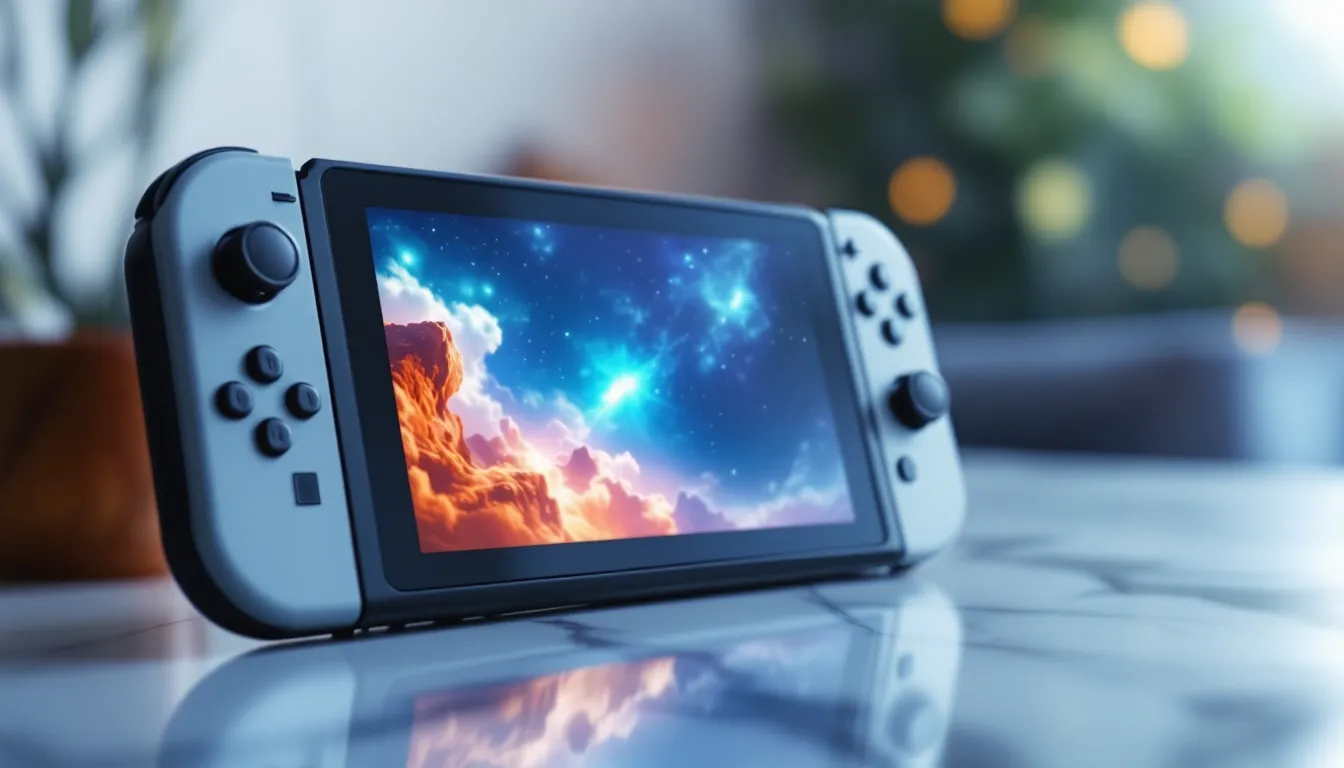


The Nintendo Switch 2 reveal is finally here, and one of the biggest debates lighting up gaming forums and Discord servers everywhere centers on a single decision: LCD or OLED? It’s not just nerd-sniping over specs. The screen technology Nintendo picks will shape how millions of gamers experience the system for the next five to seven years. Battery life, visual fidelity, durability, price, it all hinges on this one choice. Back when the original Switch launched, few people cared about the panel. But after the successful Switch OLED model proved that gamers will absolutely pay more for a premium display, this decision carries real weight. Nintendo’s standing at a crossroads, and the choice they make will signal what the company prioritizes: cutting costs, maximizing profits, or pushing visual boundaries.
Table of Contents
ToggleKey Takeaways
- The Nintendo Switch 2 LCD or OLED screen decision will define the handheld’s market positioning, price point, and whether Nintendo prioritizes premium features or mass-market accessibility over the next five to seven years.
- OLED offers superior color accuracy, deeper blacks, and faster response times, but costs 50-100% more to produce and carries a burn-in risk, while modern LCD technology delivers impressive brightness and durability at a significantly lower price.
- The Nintendo Switch 2 screen choice matters less than processing power, game library, and battery life—gamers prioritize performance and value over display technology, as demonstrated by the success of LCD devices like the Steam Deck.
- Choosing OLED would position the Switch 2 as a $349-$399 premium handheld, while LCD would enable a competitive $299-$329 price point that historically aligns better with Nintendo’s playbook of delivering fun experiences at accessible prices.
- Manufacturing scalability favors LCD, as it’s a commodity technology with flexible supply chains, whereas OLED production requires precision partnerships and multi-year contracts that limit production flexibility.
Understanding the Nintendo Switch 2 Screen Dilemma
Nintendo faces a genuine tug-of-war. The original Switch used LCD, which worked fine but felt dated compared to smartphones and tablets. When the Switch OLED dropped in 2021, it became the gold standard for handheld gaming, deeper blacks, more vibrant colors, and that satisfying “pop” that made games look genuinely better. Now, with the Switch 2, Nintendo could go all-in on OLED or revert to LCD with improved specs.
This isn’t a simple choice between old and new. Each technology comes with real trade-offs that affect everything from manufacturing costs to user experience. The financial pressure is real: OLED screens cost significantly more to produce, and scaling production to millions of units requires proven supply chains. Meanwhile, modern LCD technology has improved dramatically since 2017. Today’s high-refresh LCDs rival older OLED panels in brightness and color accuracy.
The stakes matter because the Switch 2 launch price will influence adoption rates across the market. Gamers are watching closely, knowing that whatever Nintendo chooses will define their handheld gaming experience for years to come.
OLED Technology: What Makes It Premium
OLED has legitimate technical advantages that justify the premium price, but it’s not magic, it’s physics.
Superior Color Accuracy and Brightness
OLED pixels emit their own light. Each red, green, and blue subpixel independently produces light or stays completely dark. This means perfect blacks aren’t simulated: they’re literally no light at all. A Switch OLED’s contrast ratio hits infinity because dark pixels consume zero power. LCD screens use a backlight behind the liquid crystal layer, so “black” is really just a very dark gray.
On the Switch OLED, colors appear more saturated and lifelike. Games like Zelda: Tears of the Kingdom showcase this, the green of grass, the blue of the sky, everything has more presence. The display achieves higher peak brightness in HDR content, which matters when you’re playing in bright sunlight or outdoor environments. Titles with high color fidelity, like art-focused indie games, genuinely shine on OLED.
Response Time and Motion Clarity
OLED pixels switch on and off in milliseconds, contributing to incredibly fast response times, typically under 1ms. LCD panels use liquid crystals that need time to shift orientation, resulting in slightly slower response times (usually 3-5ms). For competitive gamers, this matters in fast-paced shooters or fighting games where every millisecond counts. Motion appears cleaner on OLED: less ghosting and blur when the camera pans across a scene.
But, the Switch isn’t a platform where 1ms versus 5ms response time creates a massive skill gap like it might on a high-end gaming monitor. Still, the subjective feel of motion is noticeably smoother.
The Burn-In Risk Factor
Here’s the catch: OLED has a known weakness. Static images displayed for extended periods can cause burn-in, where pixels permanently degrade and create ghost images. It’s real, though the risk is often overstated. Modern OLED panels have pixel-shifting technology and other safeguards, and the Switch OLED has survived three years in the wild with surprisingly few burn-in complaints. Still, if you play the same game with the same UI elements on-screen for hundreds of hours, there’s a non-zero risk.
LCD doesn’t have this problem. Pixels don’t degrade from overuse. It’s inherently more durable for always-on displays or games with static HUDs.
LCD Technology: The Practical Alternative
LCD gets unfairly dismissed as “outdated,” but that’s lazy thinking. Today’s LCD tech is genuinely impressive, and Nintendo would be foolish to ignore it.
Durability and Longevity
LCD panels are battle-tested. Millions of original Switch units are still running strong in 2026 with their original screens untouched. The technology is simple, robust, and doesn’t suffer from burn-in or pixel degradation. You can abuse an LCD screen, play the same game for 8 hours straight, leave it on pause all night, and it’ll survive with no cosmetic damage.
For a device marketed to all ages and all skill levels, durability matters. Parents buying a Switch 2 for their kids care more about “won’t break” than “has perfect blacks.” The handheld is still a portable device: it goes into backpacks, gets dropped, endures harsh conditions. LCD’s industrial robustness is a genuine selling point.
LCD screens also have longer lifespan ratings. An OLED panel might dim noticeably after 10,000 hours. LCD panels are rated for 30,000+ hours before significant degradation. For a console that will see years of use, that’s a meaningful difference.
Cost Considerations
This is the elephant in the room. OLED panels cost roughly 50-100% more than comparable LCD panels at scale. For a handheld where Nintendo needs to hit a target price point and maintain healthy margins, that cost difference directly impacts retail price. A $50-70 cost difference per unit compounds across millions of devices.
If Nintendo chooses LCD, it could theoretically launch the Switch 2 at a lower price point than if OLED were mandated. That might be the deciding factor. A $299 LCD Switch 2 that undercuts competitors could outsell a $349-399 OLED version, even if the latter is technically superior. Market penetration beats marginal spec improvements in long-term success.
Brightness and Performance in Daylight
Modern LCD can get really bright. High-end gaming monitors use LCD and achieve over 500 nits peak brightness. The original Switch OLED hits around 430 nits. A properly engineered LCD screen in the Switch 2 could match or exceed OLED brightness in daylight scenarios. That was an advantage OLED held in previous generations, but it’s narrowing.
LCD also doesn’t suffer from the viewing angle issues that OLED can exhibit at extreme angles. For a handheld you’re holding directly in front of your face, this doesn’t matter much, but it’s worth noting.
What Gamers Actually Want From Switch 2
Specifications are one thing. What gamers will actually care about is another.
Performance vs Display Trade-Offs
Here’s the thing: the Switch 2’s processor, RAM, and GPU matter far more to most players than the screen. Better processing power means higher frame rates, better draw distances, and games that aren’t held back by hardware limitations. Gamers have been vocal about this.
If choosing LCD allows Nintendo to allocate cost budget toward a better processor, most competitive and casual gamers would take that trade. Better performance in Fortnite, NBA 2K25, or porting demanding titles from other platforms is tangible and affects gameplay. A slightly less vibrant screen is noticeable but doesn’t hurt game feel.
Conversely, if choosing OLED requires cutting the processor to maintain price, that’s probably a losing move. Gamers tolerate LCD screens: they don’t tolerate frame rate dips during action sequences. The ecosystem values raw computing power over display aesthetics.
Portability and Battery Life Impact
OLED panels consume slightly less power than LCD in dark scenes (since OLED pixels emit their own light and can go completely black, saving energy). But, OLED consumes more power in bright, white scenes because all pixels are at full intensity. For a handheld playing varied games, the efficiency difference is marginal, maybe 15-30 minutes of battery life swing either way, depending on game and usage.
Portability is king for handheld gaming. A lighter device with better ergonomics beats a slightly brighter screen. Battery life improvements matter more than display quality improvements at the margins. If the Switch 2 comes with a substantially larger, more efficient battery, which rumors suggest, that’ll matter more than whether the panel is LCD or OLED.
Industry Context: Competition and Market Expectations
Nintendo doesn’t exist in a vacuum. The broader handheld market and competitor choices inform expectations.
How Competitors Are Using Premium Screens
The Steam Deck launched with a 7-inch LCD screen and was praised, not criticized, for the choice. Valve prioritized processing power and functionality over visual excess. The Lenovo Legion Go and other Android-based handhelds also use LCD or miniLED solutions. Gaming enthusiasts on forums like DualShockers and IGN celebrated these devices for their performance parity with traditional consoles, not their screens.
Meanwhile, premium gaming phones increasingly rock OLED displays as standard. But phones and handhelds serve different roles. A phone is in front of your face eight hours a day. A gaming handheld is used for discrete sessions. The ROI on OLED is different.
Nintendo’s biggest leverage is its software ecosystem. Mario, Zelda, Pokémon, Metroid, these franchises drive adoption regardless of panel type. A Switch 2 with exclusive AAA titles will sell whether it has OLED or the best LCD ever made. That’s Nintendo’s actual competitive advantage, not specs.
Consumer Sentiment and Purchasing Trends
Surveys and social listening reveal gamers care most about: game library, performance, comfort, and value. Screen technology ranks lower than you’d expect. Many people who own Switch OLED consoles freely admit they can’t tell the difference from the original Switch unless they do a direct side-by-side comparison in ideal lighting.
Price sensitivity is massive in the handheld market. The $99 Nintendo Switch Lite proved that gamers will sacrifice features if the price is right. If Nintendo launches a $279 LCD Switch 2 versus a $349 OLED Switch 2, the LCD version will likely sell in higher volumes. That’s the market-reality gamers are demonstrating.
The Financial and Strategic Implications
This decision isn’t made in a conference room focused on display technology: it’s made in a room discussing profit margins, market share, and long-term positioning.
Pricing Impact and Market Positioning
If Nintendo chooses OLED, the Switch 2 likely launches at $349-$399. That’s premium handheld pricing. It positions the device against iPad and high-end smartphones in terms of cost. The messaging becomes: “This is a luxury gaming handheld for enthusiasts.” The margin improves, but install base growth might slow compared to a cheaper entry point.
If Nintendo chooses LCD, the Switch 2 could hit $299-$329. That’s aggressive pricing that undercuts most premium alternatives. The messaging shifts: “This is the best gaming value for families and casual players.” Margins compress, but market penetration increases. Given Nintendo’s historically console-agnostic approach to customers, this aligns better with the company’s playbook.
There’s also a potential three-tier strategy: a $299 LCD base model, a $349 OLED Pro model, and a $199 Lite variant. That mirrors the current market structure and maximizes revenue across price points. It’s complexity, but it’s also proven.
Manufacturing Scalability Challenges
OLED production requires precision. Defect rates, yield optimization, and supply chain stability are harder to nail at massive scale. Samsung and LG have been perfecting OLED manufacturing for over a decade and still face constraints during peak demand. Nintendo’s supply chain would need proven partners (likely Samsung Display) and multi-year contracts locked in before launch.
LCD is a commodity technology. Dozens of manufacturers can produce high-quality LCD panels. Supply is flexible. If Nintendo needs to ramp production from 5 million units to 15 million units mid-cycle due to unexpected demand, LCD flexibility wins. OLED requires pre-negotiated capacity with fewer partners, which means less room to scale.
Real-World Gaming Scenarios: Which Screen Wins
Specs are interesting, but how these screens actually perform in real gaming matters more.
Handheld Play and Game Library Optimization
For Nintendo’s first-party software like Mario Kart, Animal Crossing, and Pokémon, both LCD and OLED deliver great experiences. These games are designed with art direction, not cutting-edge graphics, as the priority. Cartoon-style games with solid color blocks look nearly identical on both panel types because there’s less fine color gradation to lose.
But here’s where RTINGS and similar display analysis sites might get interesting: modern third-party ports of graphically demanding titles (like Cyberpunk, Starfield ports, or future AAA releases) will showcase LCD and OLED differences more clearly. On OLED, sci-fi games with neon lighting and dark environments hit harder. On LCD, these games still look great but lack that punch.
In practical handheld sessions, coffee shop, commute, bedroom, most players won’t miss OLED. They’ll be focused on gameplay, not scrutinizing color accuracy. The screen difference becomes apparent when you’re comparing devices side-by-side in a store, not when you’re lost in the experience.
Docked Mode Experience
When docked, the Switch 2 connects to a TV or external monitor. Suddenly, the built-in screen becomes irrelevant. The docked experience depends entirely on the external display and the system’s GPU performance. Whether the handheld has LCD or OLED doesn’t matter for docked gameplay at all.
This is actually huge and often overlooked. If the Switch 2 is optimized for strong docked performance (which Nintendo should prioritize given the success of docked Switch gaming), then handheld screen quality becomes secondary. The real differentiator is frame rates and graphical fidelity on the external display, not the internal panel. Gamers playing in docked mode will never see the difference between LCD and OLED.
Expert Analysis: What The Choice Signals About Nintendo’s Direction
Nintendo’s decision on the Switch 2 screen will reveal something deeper about the company’s philosophy heading into the next generation.
Choosing OLED says: “We’re doubling down on premium positioning. We believe our software and brand justify higher price points, and we’re willing to sacrifice sales volume for better margins and a flagship experience.” It’s a signal that Nintendo sees the Switch 2 as a luxury device competing with gaming phones and iPads rather than a mass-market console. This strategy works if the performance gap between Switch 2 and competitors is substantial enough to justify the price.
Choosing LCD says: “We’re prioritizing value and accessibility. We want the widest possible install base, and we’re betting our software ecosystem is strong enough that display quality isn’t the bottleneck.” It’s a return to Nintendo’s traditional playbook: deliver fun games at reasonable prices, don’t chase specs, compete on experience. This historically aligns better with Nintendo’s market success.
There’s also the question of what modern LCD is actually capable of. If Nintendo partners with a panel manufacturer to develop a custom LCD with 120Hz refresh rate, 500+ nits brightness, and enhanced color gamut, the visual gap between LCD and OLED shrinks dramatically. A next-gen LCD engineered specifically for the Switch 2 could be a legitimate technical achievement, not a compromise, but a smart solution.
Industry observers will be watching. The screen choice sets the tone for how Nintendo wants the Switch 2 positioned in the market and what compromises (if any) the company is willing to make in pursuit of accessibility and scale.
Conclusion
The Nintendo Switch 2 LCD versus OLED decision matters, but it’s not a deal-breaker either way. OLED offers genuine technical advantages: superior color accuracy, deeper blacks, and that satisfying “premium” feel. But modern LCD can deliver excellent brightness, durability, and value at a lower price point. Both work for handheld gaming in 2026.
What actually drives Switch 2 adoption will be the game library, processing power, and price. Developers porting ambitious third-party titles and Nintendo’s own upcoming releases matter far more than whether the screen has OLED’s infinite contrast. Gamers want to play better versions of their favorite games without paying $400+ for hardware. If the Switch 2 delivers on that with competitive performance at a reasonable price, players won’t mourn an LCD screen.
Eventually, this choice reveals Nintendo’s bet on the console’s position in the market. Premium OLED signals luxury handheld gaming. Practical LCD signals value and inclusivity. Both are defensible strategies, the execution and software support will determine which was the right call.