

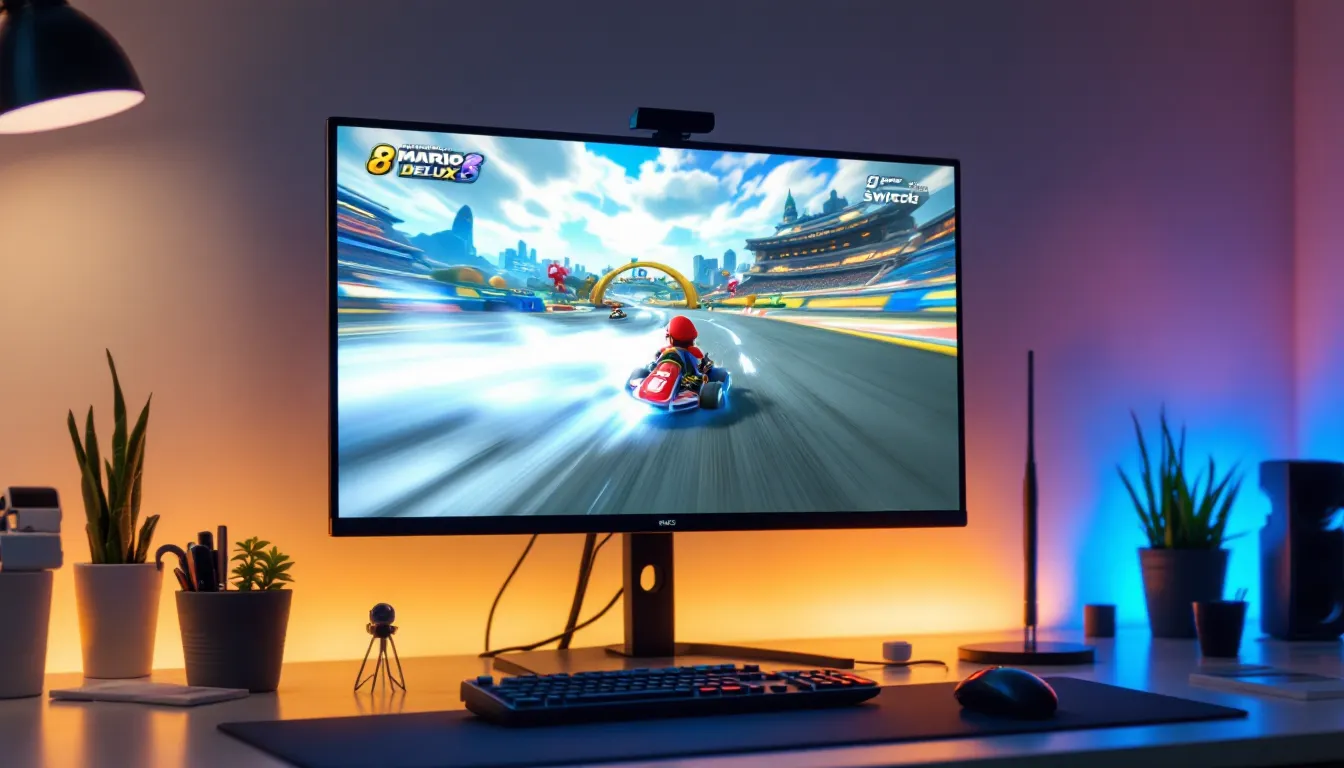
Mario Kart 8 Deluxe remains the benchmark racing game on Nintendo Switch, and it’s stayed that way for over a decade since its original Wii U release. Whether you’re looking to dominate online ranked races, destroy your friends in local multiplayer, or just chill with some casual Grand Prix runs, this guide breaks down everything you need to know to level up your game. We’re talking character builds, advanced drifting techniques, track strategies, and competitive tactics that actually work. If you’re serious about becoming a Mario Kart 8 Deluxe player worth taking seriously, stick around.
Table of Contents
ToggleKey Takeaways
- Drifting is the essential mechanic in Mario Kart 8 Deluxe—master chaining boosts across multiple turns to dominate races at 150cc and 200cc difficulty levels.
- Character weight class and kart builds directly impact performance; pair lightweight characters with technical tracks and heavyweights with speed-focused circuits for optimal results.
- The 200cc engine class transforms Mario Kart 8 Deluxe into a genuine skill test where frame-perfect execution, item timing, and psychological opponent reads become critical to competitive success.
- Online ranked play uses a Versus Rating (VR) system starting at 1000 that matches you against progressively stronger players—accept 50% win rates at your skill level and focus on consistent execution.
- Strategic item usage, track shortcuts, and defensive positioning separate casual players from competitive racers who finish in top rankings on Nintendo Switch.
- Local multiplayer and Battle Modes showcase Mario Kart 8 Deluxe’s accessibility, allowing players of all ages to compete fairly while maintaining hidden depth for those pursuing tournament-level play.
What Makes Mario Kart 8 Deluxe the Ultimate Racing Experience
Game Modes and Features You Need to Know
Mario Kart 8 Deluxe offers way more than just Grand Prix races. The game ships with multiple modes that cater to different playstyles and skill levels.
Grand Prix is the bread and butter, you race through four consecutive tracks, racking up points based on your finishing position. The difficulty scales from 50cc (pure coasting) to 150cc (where things get competitive) to 200cc (absolute chaos). Each cup features different themes: Mushroom Cup, Flower Cup, Star Cup, and Special Cup make up the original selection, with additional cups like the Booster Course Pass DLC adding fresh tracks.
Time Trial lets you race solo against the clock on any track. It’s perfect for learning track layouts, practicing shortcuts, and refining your lines without worrying about getting blown up by defensive items. This mode is where speedrunners chase frame-perfect runs.
Battle Mode is the secret weapon for local multiplayer. You’ve got standard Balloon Battle (pop three balloons, last one standing wins), Renegade Roundup (cops versus robbers), and Shine Thief (fight over a single item). Battle Mode tracks are smaller and more chaotic than racing circuits, positioning and item timing matter more than raw speed.
Online Multiplayer connects you with racers worldwide. Ranked races lock you into a rating system (starting at 1000 VR, or Versus Rating), while casual races let you practice without consequence.
The 200cc engine class deserves special mention. It’s where the game transforms into something genuinely difficult. Drifting becomes mandatory, recovery from mistakes becomes critical, and position changes happen in seconds.
Why This Game Remains a Nintendo Switch Essential
Mario Kart 8 Deluxe isn’t just a launch title that overstayed its welcome, it’s actively maintained and genuinely beloved by the community. The Booster Course Pass added 48 additional tracks (existing courses remade from Mario Kart Tour), which means there’s constantly fresh content to master.
The game’s accessibility is its superpower. Casual players can enable smart steering and auto-accelerate, making the game winnable for basically anyone. Simultaneously, the skill ceiling is absurdly high. Frame-perfect drifting, optimal line choices, split-second item usage, and psychological reads on opponents, there’s depth here that competitive players spend hundreds of hours exploring.
Cross-generational appeal matters too. A 6-year-old can race competently against a 40-year-old, which is rare in gaming. That universal appeal is why Mario Kart 8 Deluxe consistently tops Switch sales charts and why local multiplayer lobbies never die.
The game runs at 1080p handheld and 1080p docked at 60fps, which feels silky compared to earlier Mario Kart entries. It’s optimized brilliantly for the hardware. No framerate drops during 4-player chaos, no loading delays that kill momentum.
Choosing Your Character, Kart, and Tire Setup
Top-Tier Character Selections for Every Playstyle
Character choice matters more than casual players realize. Each racer falls into one of three weight classes, and that dramatically affects how your kart handles.
Heavyweight characters (Bowser, Donkey Kong, Wario, King Boo) get higher top speed and acceleration out of a standstill. They’re dominant in 150cc and 200cc where maintaining top speed matters. The trade-off is slower turning and heavier drift momentum, heavyweight players trade precision for raw power.
Lightweight characters (Shy Guy, Toad, Peach, Daisy) accelerate faster but cap out at lower top speeds. They excel in technical tracks with tight turns and competitive 200cc battles where you’re constantly boosting out of drifts. The agility advantage compounds when you’re skilled at the technique.
Middleweight characters (Mario, Luigi, Yoshi) sit in between. They’re the most forgiving choice because they don’t punish mistakes as severely and don’t have glaring weaknesses.
Here’s the meta reality: Metal Mario and Gold Mario are technically middleweight but with heavyweights’ top speed. Waluigi offers similar versatility. For ranked play, most top-tier players default to heavyweights because the speed advantage outweighs the handling penalty once you’ve mastered drifting.
DLC characters like Birdo, Daisy (with her weight class shift in later updates), and others expand your options, but fundamentally, character choice should align with the track. Tight technical tracks? Go lightweight. Speed-focused tracks like Luigi’s Mansion or Royal Raceway? Heavyweight.
Kart and Tire Combinations: Finding Your Optimal Setup
Your kart body and tire choice creates your actual stat profile. This is where spreadsheet-level optimization lives.
Kart bodies range from the Standard Kart (balanced, boring) to specialized builds:
- Pipe Frame: Light, agile, excellent for tight handling
- Mach 8: Heavy, fast, favored in competitive 150cc
- Koopa Clown: Interesting handling characteristics, niche picks
- Wiggler Car: Custom design, purely aesthetic unless stats align
Tires dramatically shift your performance:
- Standard Tires: Balanced, reliable
- Slim Tires: Highest acceleration, notably lighter, popular for gripping drifts
- Slick Tires: Top speed specialist, reduces traction (high-risk, high-reward)
- Mushroom Tires: Ground control specialist, useful for technical tracks
- Monster Tires: Worst acceleration but exceptional off-road handling
The competitive meta typically mirrors this: Pipe Frame + Slim Tires is the go-to for 150cc and 200cc because acceleration into drifts matters so much. You’re constantly boosting, and that setup lets you chain them efficiently.
For casual play, don’t agonize over this. Pick what feels right. But if you’re hitting ranked play, stick with proven builds until you understand why they work. Then experiment.
Mastering the Basics: Controls and Mechanics
Drifting, Boosting, and Speed Control Fundamentals
Drifting is the single most important mechanic in Mario Kart 8 Deluxe. It’s not optional at 150cc or 200cc, it’s the foundation of every move you make.
The mechanic itself is simple: hold drift (ZR on Pro Controller), steer into a turn, and the kart slides. A blue shimmer appears, then after a moment, it turns orange. Release drift when it’s orange to get a boost. Chain boosts through multiple turns, and you’re hitting speeds that solo acceleration can’t match.
The advanced version is turbo drifting: immediately start another drift without letting the first boost complete. Competitive players chain three, four, sometimes five boosts in sequence through technical sections. This is where races are won and lost.
Timing is everything. Start drifting too early, and you’ll lose momentum. Too late, and you’ll hit the wall. The sweet spot changes based on your character weight, kart setup, and track. Heavy characters need to start drifting earlier because their turning radius is larger.
Speed control sounds simple but it’s counterintuitive: sometimes going slower helps. If you’re drifting through a turn and an item is coming, letting off the accelerator briefly can reposition your trajectory without losing the drift boost. It’s a niche skill, but it saves you from getting hit at critical moments.
The mushroom boost (green shell-looking item) combines with drifting beautifully. Activate it during a drift to extend the slide further and extend your boost window. Timing a mushroom into a sharp corner turn is visual satisfaction and mechanical advantage rolled into one.
Advanced Techniques for Competitive Racing
Once you’ve mastered basic drifting, the next tier involves reading track geometry and memorizing optimal lines.
Line optimization means taking the tightest possible path through each turn while maintaining speed. In Mario Kart, the ideal line often cuts across grass or off-road sections because your kart maintains better momentum than sliding along the edge of the track. It looks worse than hugging the track edge, but it’s objectively faster.
Shortcut recognition is next. Most tracks have at least one hidden path that saves time. Moo Moo Meadows has an off-road cutout at the second turn. Dragon Driftway has a wall-clip area. Learning where these live and how to execute them cleanly is where you gain seconds on competitors.
Defensive positioning is critical in online play. If someone’s directly behind you with a red shell, don’t panic. Stick to a predictable line, let them lock on, then swerve at the last moment. Or, drift around a blind corner and they’ll overshoot. Understanding that positioning is defense separates casual racers from ranked competitors.
Item economy at advanced levels means you’re holding items strategically. A red shell in first place is more valuable than a green shell, you only drop it when you’re genuinely threatened. Bananas are held and deployed as road hazards. Knowing when to use an item versus when to hold it changes races.
Finally, psychological play exists at the highest levels. If you’re in second place and the leader is playing ultra-defensively, sometimes baiting them into a mistake by appearing to attack, then breaking off, forces them into panic mode. This is rare in pure skill-based discussion, but it matters in competitive racing communities.
Track-by-Track Strategy and Expert Tips
Cup Recommendations for Different Difficulty Levels
Not all tracks are created equal, especially when difficulty ramps up.
50cc Grand Prix is designed for new players and children. The AI barely competes. Use this to learn track layouts without pressure. Focus on understanding the circuit flow, finding shortcuts, and getting comfortable with controls. No strategy needed here, finish and move on.
100cc introduces genuine AI pressure. Your opponents are competent now. This is where you should practice drifting in low-stakes races. The Mushroom Cup (first cup) is a good starting point: Luigi Circuit is straightforward, Moo Moo Meadows has minimal hazards, and everything flows logically. Flower Cup comes next and introduces more obstacles. Use this difficulty to nail your lines without overthinking.
150cc is where casual players feel genuine tension. AI pilots are aggressive, items are frequent, and mistakes cost positions. Start with known tracks and cups. The Mushroom and Flower cups are still manageable. Star Cup introduces more complex layouts (Piranha Plant Slide, Toad’s Turnpike). Special Cup is where things get ridiculous, Rainbow Road is the finale and it’s punishing at 150cc.
200cc is genuinely different. The game feels faster, AI recovers from mistakes instantly, and a single drifting error can drop you from first to fourth. Your first 200cc experience should be solo Time Trial on tracks you know. Luigi Circuit, Mario Circuit, or Mushroom Gorge are forgiving. Once you’re comfortable chaining drifts at high speed, attempt the Grand Prix. You’ll likely finish last your first attempt, that’s normal. 200cc is a skill check.
Booster Course Pass tracks (DLC) add 48 new courses. Tracks like Bangkok Rush (tight, requires precision), Coconut Mall (long straightaway, boost windows), and Sky Garden (multiple lines) each demand different approaches. Research their layouts before attempting 150cc/200cc.
Shortcuts and Hidden Paths on Popular Tracks
Shortcuts separate competitive players from the casual crowd.
Luigi Circuit: Clean, minimal shortcuts. The only real path variance is how tight you take the turns. Focus on line optimization over seeking hidden breaks.
Moo Moo Meadows: There’s a grass cutout after the second turn that saves significant time. Drift toward the grass (left side of the track) and power-slide through the open field instead of following the track boundary. This is one of the easiest shortcuts and nets you half a second per lap.
Mario Circuit: The first turn has a blue-shell-styled grass dip on the left. Cutting through it shaves time. Less impactful than Moo Moo, but every frame counts.
Piranha Plant Slide: This track is a shortcut masterclass. The opening section has a pipe you can boost-glitch through if you time your approach perfectly. The second section has grass cuts. The final section has a wall-clip opportunity if you’re skilled enough. Time spent learning this track pays dividends.
Toad’s Turnpike: Multi-lane highway with traffic. The rightmost lanes often have traffic-free gaps. Timing your line to avoid vehicles while maintaining drift chains is the “shortcut”, there’s no secret path, just traffic awareness.
Rainbow Road: The iconic blue track with no walls. You can cut corners aggressively here because falling off is your only real penalty. The second section has a diagonal path across the star platforms that’s faster than following the track edge.
Booster Course tracks often have shortcuts designed in. Sky Garden has a gliding section (hit the glider) that you can extend by drifting before landing. Baby Park (DLC remake) is a tiny oval with minimal shortcutting, raw racing skill matters most.
The universal principle: if it’s not the track boundary, cutting through it (grass, dirt, water) is often faster because the surface let’s you maintain boost momentum. Always test shortcuts in Time Trial mode first.
Online Multiplayer and Competitive Play
Getting Started with Online Ranked Races
Online ranked play is where Mario Kart 8 Deluxe separates casual enjoyment from competitive pursuit. Entering ranked racing is genuinely intimidating your first time, everyone’s drifting perfectly, shortcuts are flawless, and you’re finishing 11th out of 12.
You start at 1000 VR (Versus Rating). That’s intentional, it’s middle-of-the-road skill. You’ll win some, lose most. That’s fine. Your VR adjusts based on performance relative to your opponents. Finish first? +5 VR. Finish 8th while everyone else is 9000+ VR? Maybe +2 VR. The system self-corrects toward your actual skill level.
Your first ranked season should focus on consistency over optimization. Pick one character/kart setup and race 20+ times on it. Learn the feel, stop second-guessing your choices, and focus on execution. Waffling between setups every race kills development.
Second, accept losses. The ranking system is designed to put you against progressively harder opponents as you climb. 50% win rate at your skill level is actually good. Some players get discouraged thinking they should win every race. That’s not how skill-based matchmaking works.
Third, watch top players. YouTube channels featuring ranked gameplay (search “Mario Kart 8 Deluxe ranked” on gaming sites like Game Informer) show how elite players approach unfamiliar tracks, manage items, and position themselves. Watch their lines, their drift chains, their defensive moves. You’ll pick up patterns.
Casual online races are lower-pressure alternatives. You can join without a rating, experiment with different setups, and just race for fun. These are perfect for testing character builds before committing to ranked grind.
Building Skills Against Stronger Opponents
Once you’re hitting 2000+ VR, you’re in the skilled-player bracket. Races are tight. Item RNG still matters but mistakes are absolutely punished.
The fastest skill improvement comes from playing against people better than you. If you’re consistently in top 3 with your skill-level peers, you’re optimized at that ceiling. Jump into a higher-skill lobby and expect to finish 8th. That’s where learning happens. Watch the 1st place player’s inputs, their drift timing, their shortcut choices. There’s a reason they’re winning.
Adapt mid-race. If a particular opponent is aggressive with red shells, take a more defensive line and hold protective items. If someone’s weak on technical corners, attack on those sections. Reading opponents in real-time beats rigid, pre-planned strategies.
Analyze track pick patterns. If you’re consistently losing on certain tracks, Time Trial those circuits relentlessly. Don’t avoid weak points, lean into them. Spend 20 minutes optimizing your line on Bone Dry Desert instead of racing it online over and over.
Streamers and competitive communities (Reddit’s r/MarioKart is solid) discuss meta-shifts. Sometimes a patch changes item behavior or character balance. Staying aware of these tweaks helps you adapt faster than players ignoring updates.
Finally, accept that 3000+ VR is a different game. At that tier, almost every player is executing frame-perfect drifts, knowing every shortcut, and timing items perfectly. Differences shrink to microseconds. You need pure, cold precision. Most players plateau around 2500-3000 VR and that’s genuinely respectable. Beyond that, you’re entering tournament-player territory.
Battle Mode Strategies and Fun Alternatives
Navigating Different Battle Mode Types
Balloon Battle is the classic: three balloons per player, lose them all and you’re out. Last person standing wins the round.
Strategy here is positioning. In Battle Mode tracks (smaller, more chaotic than racing circuits), real estate matters. If you’re defending three balloons, you want access to items but you’re also vulnerable everywhere. Smart players stick near item boxes, grab defensively useful gear (green shells, bananas, POW blocks), and rotate between hiding spots rather than driving in straight lines.
Item management is different than racing. Red shells are less useful (everyone’s close range), but green shells are deadly because there’s nowhere to hide. A POW block deployed in a tight corridor eliminates multiple players. Mushrooms are escape tools. Lightning bolts are round-enders (everyone loses one balloon simultaneously).
Renegade Roundup flips the script: five cops versus five robbers. Robbers escape, cops catch them. Getting caught means joining the cop team (making the imbalance worse). The robbers’ only win condition is surviving until time runs out.
Robber strategy is evasion. Stick together to overwhelm isolated cops, find track sections with multiple escape routes, and save mushroom boosts for critical moments when you’re cornered. Cops play offense, isolate robbers, pin them against walls, and coordinate to surround.
This mode is genuinely different from racing. It’s part strategy, part psychology. Are the cops grouping up? Scatter and make them choose targets. Are they spreading thin? Regroup and push one side.
Shine Thief is king-of-the-hill. Someone holds the Shine sprite. Everyone else attacks them. Holding the Shine gives you a speed boost but makes you the target.
The meta is constantly passing the Shine between teammates (or in free-for-all, cycling it between weaker opponents). Being Shine-holder is good (speed advantage) and bad (everyone’s attacking you). Smart plays involve grabbing the Shine when someone’s being chased hard, then immediately passing it off to let the previous holder break free.
Local Multiplayer Tips for Parties and Gatherings
Local multiplayer is where Mario Kart 8 Deluxe truly shines. Whether it’s 2-player handheld or 4-player split-screen, the energy is different than solo ranked.
2-player handheld racing (two Joy-Cons, one console) is underrated. It’s intimate, immediate, and oddly competitive. Cup races are the standard, but Time Trial head-to-head is surprisingly intense. First to beat a target time advances.
4-player split-screen is the party mode. Here’s the thing: split-screen running at 60fps on Nintendo Switch is legitimately impressive. No framerate drops. No significant lag. It’s pure chaos.
For tournament-style parties, run a Grand Prix cup with everyone using the same difficulty (usually 150cc for competitive friends, 100cc for mixed skill). Track the scores and declare an overall winner. It’s simple, it’s fair, and it creates narrative (someone’s been crushing it, someone’s making the comeback).
Battle Mode parties are where it gets silly. Balloon Battle with 4 people, one map rotation, first person to win three rounds is champ. Renegade Roundup with shifting cop/robber dynamics is chaotic fun even if it’s not “fair.” Shine Thief is pure randomness, whoever’s holding the Shine gets dogpiled, nothing’s strategic, everyone’s laughing.
Pro tip for hosting: Mix game modes. Don’t do four consecutive cup races. Do one race, then a Battle Mode round, then a Time Trial challenge. Variety keeps energy high and prevents one player from dominating completely.
If you’re setting up a Mario Kart 8 Deluxe tournament, use 150cc on neutral tracks where no single person has practiced extensively. Avoid tracks that favor heavy characters if someone’s obviously heavier-dependent. Rotate who picks the cup each round. Equal starting positions are essential for perceived fairness.
Item Strategy and Power-Up Usage
Defensive Items vs. Offensive Weapons
Items in Mario Kart aren’t just random bonuses, strategic items separate winners from racers who finish third.
Red Shells are offensive arrows: they lock onto the racer directly in front of you and fly straight at them. But in first place, they’re useless. This is why holding a red shell in first is strategically wrong. You can’t use it, and you’re burning an item slot. Drop it, block a straightaway with a banana instead.
Red shell defense involves reading incoming fire. If you’re in second and the third-place racer fires a red shell at you, stick to an unpredictable line. Sharp turns, drifting around blind corners, taking unusual lines, all make it harder for the shell to track. Some players panic-boost (wasting a mushroom), but good players just finesse the line.
Green Shells are contact weapons: they bounce until hitting someone. They’re awful when fired forward (opponents just dodge) but devastating when dropped behind you as a trap. If you’re leading and approaching a straightaway, dropping a green shell in the middle forces followers to brake or risk getting hit. This is pure positioning warfare.
Bananas are underrated. A single banana dropped in a tight turn is a hazard that disrupts timing for anyone following. Unlike shells, bananas stick around unless hit. Dropping a trail of bananas in a technical section creates an obstacle course.
Mushrooms are acceleration items, not weapons. One mushroom boost lets you catch someone ahead, three mushrooms in rapid succession (by drifting between uses) accelerates you into another league entirely. But mushrooms are also psychological, if the leader sees mushrooms from behind, they know an attack’s coming.
Defensive items (Bullet Bill, Triple Red Shells, Triple Green Shells) protect you by being intimidating. Having a Bullet Bill ready says “don’t attack me.” It’s a deterrent. Smart racers fire them preemptively when they know someone’s about to attack, wasting their offensive item.
Star and Lightning are chaos items. A Star makes you invincible and gives a speed boost, pure advantage. Lightning temporarily shrinks all other racers and destroys their items. Both are game-changers when deployed mid-race, but both are equally effective on anyone, so there’s limited strategy beyond “use it when you’re desperate.”
Timing and Positioning for Maximum Impact
Item timing is the difference between a successful attack and wasting resources.
Firing a red shell too early gives the opponent time to react and position defensively. Firing it into a blind corner where they can’t see it coming is decisive. The same applies to green shells, fire them where the opponent can’t dodge without making a dramatic line change.
Mushroom boosts are best used on straightaways where you maintain high speed. Using a mushroom into a tight technical section is wasteful because you’ll immediately brake for the turn. Competitive players hold mushrooms until they hit straightaways, then chain boosts through multiple turns using drifts.
Position-based strategy means knowing when you’re vulnerable. If you’re in first place and you see three mushrooms from behind, you’re about to get attacked. Pre-position defensively: take lines that make you hard to hit, save a banana for the attacker’s likely path, and be ready to boost away. If you’re in fourth place and holding a red shell, wait for the third-place racer to launch an offensive before firing, you want to counter-attack, not initiate.
Item luck vs. skill is the eternal debate. RNG determines what items you get, and occasionally someone gets three mushrooms while you get a green shell. But skilled players minimize the impact of item disadvantage. If you’ve got a green shell and they’ve got a red shell, don’t let them get a clean shot. Stay close, brake hard in turns, don’t predictably drift, make their red shell target impossible to hit.
Finally, holding items strategically matters more at high levels. A blue shell (chasing 1st place) is dangerous but it’s a ticking bomb. If you’re in 1st and someone has a blue shell, you can’t stop it, so focus on staying ahead. If you’re in 2nd and they have a blue shell, they’ll fire it at 1st inevitably, so capitalize on the chaos it creates.
In multiplayer with friends, item strategy becomes psychological. Who did you attack last race? They’ll retaliate. If you’re always nice to one player, they’ll unconsciously favor you when distributing items or attacking. It sounds crazy, but subconscious bias absolutely affects casual play.
Unlockables, Achievements, and Post-Game Content
How to Unlock All Characters and Karts
Mario Kart 8 Deluxe launched with a roster of 42 characters (DLC expanded this significantly). Most are available immediately, but a handful require unlocking.
Characters unlocked through playing:
- Unlock cups by completing Grand Prix: 50cc completion unlocks characters like Daisy and Waluigi (though some are available from the start depending on the version)
- Gold category unlock: Complete all cups on 150cc to unlock the challenging Mirror Mode cups
- Specific characters like King Boo and Shy Guy are unlocked by completing various cups at different difficulty levels
The exact unlock progression varies because Nintendo adjusted it after launch, and patches changed availability. The current version (as of 2026) has most characters immediately playable. The simplest path: complete 150cc Grand Prix on all cups, and you’ll unlock remaining characters through natural progression.
DLC characters (part of the Booster Course Pass or individual purchases) are instantly available if you’ve purchased the content. These include brand-new additions to the franchise and returning faces from older Mario Kart games.
Kart customization unlocks come from completing various challenges and progressing through cups. Standard karts and tires are immediately available. Specialty items like Wario Bike, Peach’s Sports Bike, and custom designs unlock through Grand Prix completion at 150cc and 200cc.
Pro tip: Don’t stress about unlocks if you’re playing casually. You start with enough character and vehicle variety to enjoy 50cc and 100cc completely. Unlocking is a byproduct of simply playing and advancing through difficulty levels. By the time you’re consistently racing 150cc+, you’ll have access to nearly everything.
Challenge Modes and 200cc Difficulty
200cc Grand Prix is unlocked by beating all cups at 150cc. It’s not optional if you’re serious about the game, it’s the actual skill test.
200cc fundamentally changes Mario Kart. Top speeds are substantially higher. The AI drivers are brutally aggressive and they don’t miss drifts. Mistakes are immediately punished. A single spin-out can drop you from 1st to 7th because the field is so tight and fast.
Your first 200cc race should be expected to end with a last-place finish. That’s normal. The difficulty doesn’t ramp up gradually, it’s a hard wall. Your second or third race might yield a top-8 finish. After 10-15 races, you’ll start reaching podium positions. Consistency comes after 30+ races.
Mirror Mode is traditional Mario Kart fare: all tracks are horizontally flipped. This is pure perspective challenge. Shortcuts you know are mirrored. Optimal lines are reversed. If you’re intimately familiar with track geometry, Mirror Mode is artificial difficulty (harder purely because it’s unfamiliar, not because it’s mechanically harder). For new players, it’s genuinely disorienting.
Custom GP modes let you create your own cup selections and difficulties. You can pick any four tracks and race them back-to-back on any difficulty. This is useful for practicing specific tracks or creating custom tournaments with friends.
Achievements and Challenges (if present in the current version) typically involve specific milestones: winning 50 races, drifting 1000 times, collecting items, or placing high on leaderboards. These exist more for goal-oriented players than competitive racers.
Post-game grind for most players involves online ranked racing. That’s where infinite replayability lives. Completing Grand Prix at 200cc is the “end game” in single-player, after that, you’re chasing rating improvements and skill refinement.
Common Mistakes and How to Avoid Them
Beginner Pitfalls and Quick Fixes
New players make predictable errors that compound into losses.
Mistake 1: Not drifting. Casual play with no drifting is viable at 50cc and 100cc. But 150cc? You’ll lose. Drifting isn’t optional, it’s essential. If you’re struggling at 150cc, practice drifting on familiar tracks in Time Trial mode. Spend 10 minutes learning the rhythm: enter turn, hold drift, steer, wait for orange shimmer, release for boost.
Fix: Dedicate a single session to drifting. Ignore winning. Focus on chaining three boosts in a row. Once you can do that consistently, your 150cc performance skyrockets.
Mistake 2: Holding bad items. A casual player grabs a green shell and drives with it for two laps because they’re waiting for the “perfect moment.” By then, someone faster has obtained a better item. Items are meant to be used or dropped strategically, sitting on them is wasting potential.
Fix: Use defensive items immediately. Drop bananas in technical sections. Fire green shells at incoming opponents instead of holding them. Most items lose value the longer you carry them.
Mistake 3: Choosing character/kart based on appearance. A new player loves Toad, so they race Toad on a heavy-character-friendly track and wonder why they’re slower. Character builds matter and they matter more as difficulty increases.
Fix: Pick based on track characteristics. Technical tracks? Lightweight. Speed-dominant tracks? Heavyweight. Don’t fall in love with a character: fall in love with winning.
Mistake 4: Braking before turns. Driving into a turn, hitting brakes, then drifting is slower than drifting immediately and letting drift momentum handle the turn. New players instinctively brake because they think it helps control, but it doesn’t.
Fix: Stop braking. Let drift handle turning. Trust the mechanic. You’ll feel uncontrolled for a few races, then it’ll click and everything gets faster.
Intermediate Mistakes to Outgrow
Players hitting 150cc consistently make subtler errors that prevent them from reaching 200cc+ competency.
Mistake 1: Wasting mushrooms. An intermediate player has a mushroom and sees an opponent slightly ahead, so they boost immediately. A better player waits for the straightaway where the mushroom maintains speed longer. The difference is minimal per-race, but across 100 races it compounds.
Fix: Hold mushrooms until you’re entering a straightaway. This isn’t always possible (desperate catch-up situations justify early use), but learn the discipline of holding strategically.
Mistake 2: Predictable racing. You always take the same line through Mario Circuit’s first turn. Intelligent opponents anticipate this and position items accordingly. Varying your lines makes you harder to hit.
Fix: On tracks you know well, consciously switch between two or three different lines through key turns. It feels awkward, but unpredictability is a genuine advantage.
Mistake 3: Item positioning fails. You’ve got a red shell and you’re chasing first place. They’re ahead on a straightaway, so you fire. They hear the lock-on sound and swerve, your shell misses. You wasted it.
Fix: Fire items into corners where opponents can’t dodge dramatically without hitting walls. Fire items when they’re distracted (driving through item chaos, dealing with another attack). Strategic timing beats raw aggression.
Mistake 4: Not learning from losses. A player finishes 4th on a track and immediately moves to the next race. A better player finishes 4th and spends five minutes analyzing why. What position were they in at the first turn? Where did they lose ground? What could they have done differently?
Fix: After losing, spend two minutes reviewing your performance. Did someone outdrift you? Did you miss a shortcut? Did item RNG destroy you? Understanding the “why” accelerates improvement.
Mistake 5: Ignoring track specialists. Some players are unbeatable on certain tracks. A casual approach is “that’s just how it is.” A focused approach is studying how they win on that track and adapting.
Fix: If someone dominates a specific track, watch them race it (or race against them repeatedly). Identify their line choices, when they use items, where they gain time. Copy what works.
Conclusion
Mario Kart 8 Deluxe isn’t just a casual party game, though it excels at that. It’s a genuinely deep competitive racer with a skill ceiling that rewards hundreds of hours of practice. The fundamentals are approachable: basic drifting, item usage, track learning. But mastery involves frame-perfect execution, psychological read of opponents, and optimization of every millisecond.
Your path forward depends on your goals. If you want to dominate local multiplayer with friends, learn the basic drifts, practice your favorite tracks, and focus on psychological play in Battle Modes. You’ll win races and have fun within a few hours of practice.
If you’re aiming for competitive online ranked play, the journey is longer. Commit to learning 200cc mechanics, studying top-tier players’ techniques, and grinding ranked races to build rating. Most players plateau around 2000-2500 VR, which represents genuinely solid competency. Beyond that requires tournament-level dedication.
Whichever path you take, remember that Mario Kart 8 Deluxe’s true appeal is its accessibility. A 6-year-old and a 40-year-old can race together competitively (with assists), and both can enjoy themselves. Master the basics, understand your character and vehicle builds, practice your lines, learn item strategy, and watch the competition. The game rewards persistence and deliberate practice, exactly like any skill worth developing.
Now hit the track. First place isn’t going to finish itself.